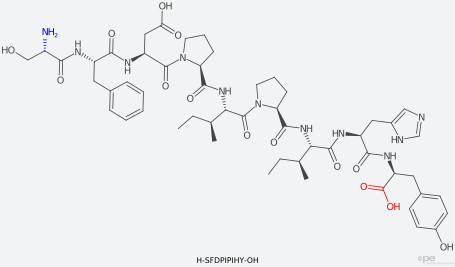

HIV env 216-224 (HLA-A*29:02) SFDPIPIHY
€105.00*
Description
HLA class I restricted CD8+ T-cell responses against HIV-1 were analyzed in African patients. Significantly more responses were shown to be HLA-B restricted. Viral load, CD4 count, and thus rate of disease progression were also associated with HLA-B alleles. In addition, the selection pressure imposed on HIV-1 by HLA-B alleles was shown to be substantially greater than by other alleles. This epitope was suggested to be the epitope within a longer reactive peptide based on correspondence with a known epitope in the HIV database. Also, a significantly higher frequency of people in the Durban cohort who reacted with the peptide had this HLA type.HLA class I restricted CD8+ T-cell responses against HIV-1 were analyzed in African patients. Significantly more responses were shown to be HLA-B restricted. Viral load, CD4 count, and thus rate of disease progression were also associated with HLA-B alleles. In addition, the selection pressure imposed on HIV-1 by HLA-B alleles was shown to be substantially greater than by other alleles. This epitope was suggested to be the epitope within a longer reactive peptide based on correspondence with a known epitope in the HIV database. Also, a significantly higher frequency of people in the Durban cohort who reacted with the peptide had this HLA type.HLA class I restricted CD8+ T-cell responses against HIV-1 were analyzed in African patients. Significantly more responses were shown to be HLA-B restricted. Viral load, CD4 count, and thus rate of disease progression were also associated with HLA-B alleles. In addition, the selection pressure imposed on HIV-1 by HLA-B alleles was shown to be substantially greater than by other alleles. This epitope was suggested to be the epitope within a longer reactive peptide based on correspondence with a known epitope in the HIV database. Also, a significantly higher frequency of people in the Durban cohort who reacted with the peptide had this HLA type.HLA class I restricted CD8+ T-cell responses against HIV-1 were analyzed in African patients. Significantly more responses were shown to be HLA-B restricted. Viral load, CD4 count, and thus rate of disease progression were also associated with HLA-B alleles. In addition, the selection pressure imposed on HIV-1 by HLA-B alleles was shown to be substantially greater than by other alleles. This epitope was suggested to be the epitope within a longer reactive peptide based on correspondence with a known epitope in the HIV database. Also, a significantly higher frequency of people in the Durban cohort who reacted with the peptide had this HLA type.HLA class I restricted CD8+ T-cell responses against HIV-1 were analyzed in African patients. Significantly more responses were shown to be HLA-B restricted. Viral load, CD4 count, and thus rate of disease progression were also associated with HLA-B alleles. In addition, the selection pressure imposed on HIV-1 by HLA-B alleles was shown to be substantially greater than by other alleles. This epitope was suggested to be the epitope within a longer reactive peptide based on correspondence with a known epitope in the HIV database. Also, a significantly higher frequency of people in the Durban cohort who reacted with the peptide had this HLA type.
TechData
| Sequence: | SFDPIPIHY |
| Gene: | env |
| Delivery: | 3 weeks |
| C-Terminus: | OH |
| N-Terminus: | H |
| Amount: | 1 mg |
| Counterion: | TFA |
| Protein: | Envelope glycoprotein gp160 |
| Species: | HIV |
| Allele: | HLA-A*29:02 |
| Application: | Flow Cytometry, Immunohistochemistry |
| Indication: | Infectious disease |
| Purity: | 95% HPLC-MS |
More HIV env proteins