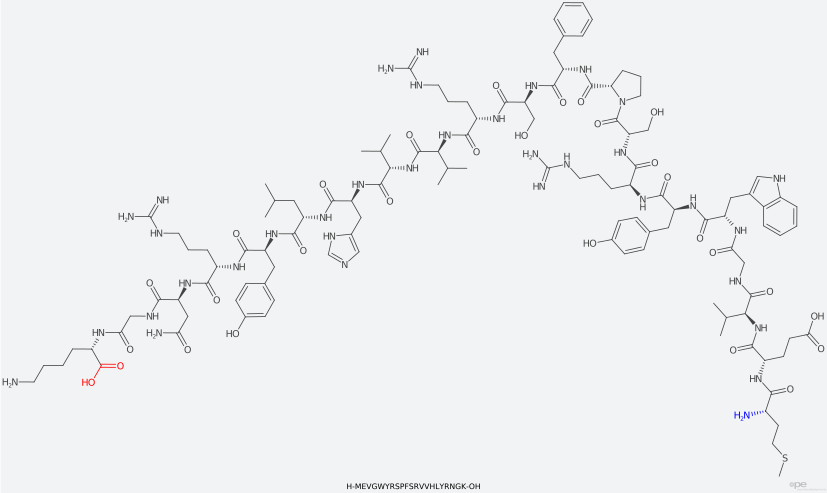

MOG 35-55 Peptide MEVGWYRSPFSRVVHLYRNGK
€266.20*
Description
Myelin oligodendrocyte glycoprotein (MOG) is a minor but immunologically significant component of central nervous system (CNS) myelin. The MOG 35–55 peptide with the amino acid sequence MEVGWYRSPFSRVVHLYRNGK represents an immunodominant epitope, and is believed to be a target autoantigen in multiple sclerosis. It is widely used in neuroimmunology to model autoimmune demyelinating diseases.
This peptide is a well-established inducer of experimental autoimmune encephalomyelitis (EAE) in rodents, closely mimicking the relapsing–remitting course of multiple sclerosis (MS). Immunization with MOG 35–55 triggers strong T cell and B cell responses, leading to plaque-like demyelination in the CNS.
Due to its cysteine-containing sequence, MOG 35–55 can also be used to generate high titers of polyclonal anti-MOG antibodies in rabbits, demonstrating excellent specificity and affinity. These antibodies are suitable for peptide-coated ELISA and Western blot assays.
In addition to autoimmune research, MOG 35–55 has been investigated in neurodegenerative models involving the neurotoxin MPTP (1-methyl-4-phenyl-1,2,3,6-tetrahydropyridine). MPTP selectively damages dopaminergic neurons in the substantia nigra, reproducing many biochemical and pathological features of Parkinson’s disease. In such models, immunization with MOG 35–55 has been shown to suppress spontaneous regeneration of dopaminergic neurons, making it a versatile tool for both autoimmune and neuroregenerative research.
Applications:
- Induction of EAE models for multiple sclerosis research
- Generation of anti-MOG antibodies
- ELISA and Western blot assays
- Studies on CNS demyelination and neuronal regeneration
TechData
| Sequence: | MEVGWYRSPFSRVVHLYRNGK |
| Gene: | mog |
| Delivery: | 1-3 days |
| C-Terminus: | OH |
| N-Terminus: | H |
| Amount: | 5 mg |
| Counterion: | TFA |
| Protein: | Myelin-oligodendrocyte glycoprotein |
| Species: | Mouse, Rat |
| Indication: | Neuroscience |
| Purity: | 95% HPLC-MS |
More MOG peptides