
Esophagogastric adenocarcinoma: Tumor-associated antigens, immune responses and HLA-I expression
Research updates
The checkpoint inhibitors nivolumab and pembrolizumab can be effective in esophagogastric adenocarcinoma, but objective response rates are low and most patients do not benefit from treatment. The resistance to immune checkpoint inhibition is still not fully understood.
Anti-PD1 therapy and other immunotherapeutic approaches aim to boost antitumor T cell responses that target mutation-associated neoantigens and, in particular, tumor-associated antigens, because they are present in various types of cancer. Targeting a single tumor-associated antigen often yields limited results due to cancer cells' immune escape mechanisms. Conversely, in lymphomas and myeloma, targeting multiple tumor-associated antigens simultaneously has shown promise, which seems to synergize with the inhibition of immune checkpoints. Specific immune responses against tumor-associated antigens also play a significant role in immune monitoring during clinical trials.
Peptide pools of most relevant tumor-associated antigens
Martin Thelen, a member of Hans Anton Schlösser's research team at the University of Cologne in Germany, along with his colleagues, has identified the most significant tumor-associated antigens in esophagogastric adenocarcinoma.[1] In samples of 41 treatment-naive patient, the team analyzed the RNA expression of tumor-associated antigens using NanoString technology.
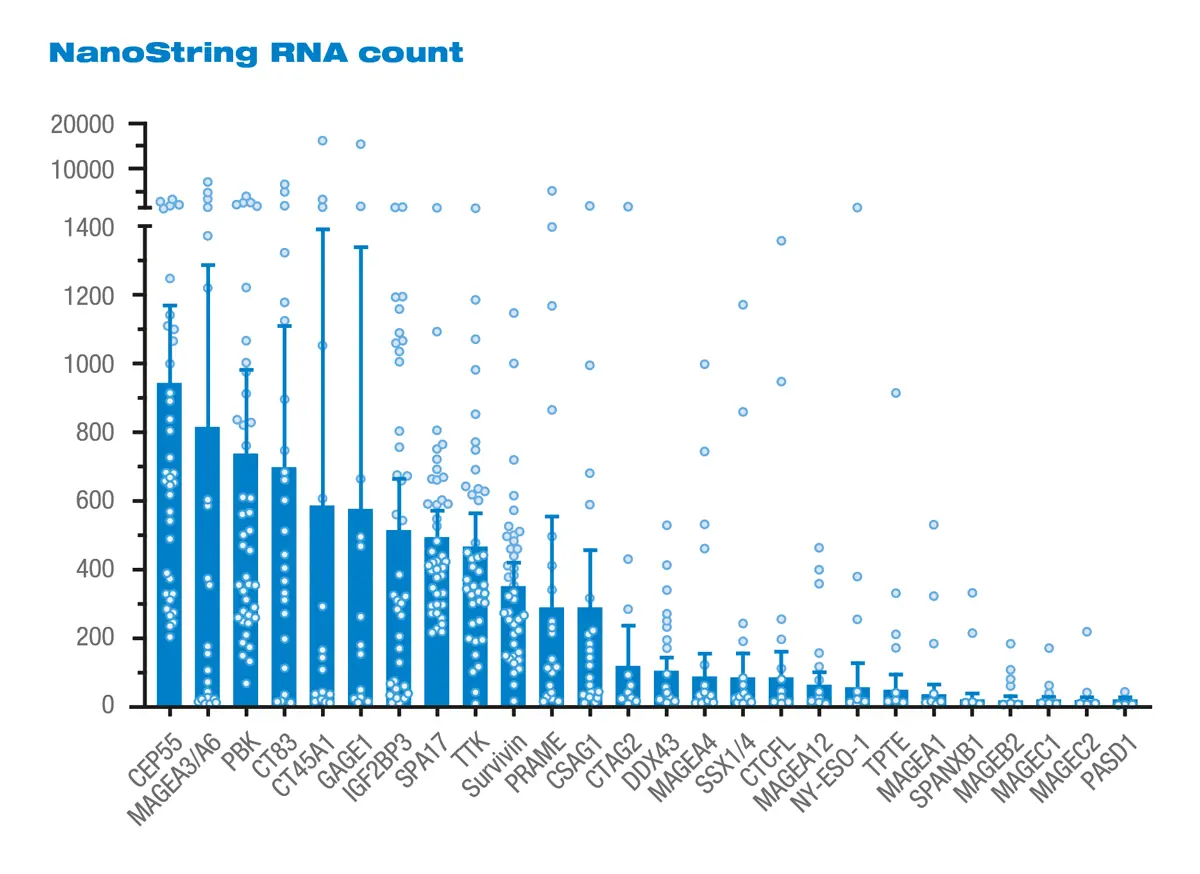
The findings indicated that 68.3% of the patients concurrently expressed five or more tumor-associated antigens, with coexpression in distinct clusters.
The researchers utilized FluoroSpot and protein-bound bead assays to determine how endogenous T cells and antibodies reacted to the ten most relevant tumor-associated antigens. These antigens were selected based on their high expression within the cohort or previous descriptions in esophagogastric adenocarcinoma, including:
The scientists used the tumor-associated antigens in the form of peptide pools from peptides&elephants. To detect endogenous T cells, the team cultured PBMCs for 20 hours on pre-coated FluoroSpot plates – either with or without peptide pools of the tumor-associated antigens. The outcome revealed that 75.0% of the patients displayed an endogenous cellular response (IFN-γ or IL-2) to at least one of the tumor-associated antigens.
Furthermore, antibodies against at least one of the ten tumor-associated antigens were found in 53.7% of the analyzed sera, as determined by protein-bound bead assays.
Antigen expression and immune responses rarely occur simultaneously
When comparing the experimental approaches, the scientists observed that the expression of tumor-associated antigens, T cell reactions, and humoral reactions were most frequently detected in that order. In more than half of the esophagogastric adenocarcinoma patients, expression of the tested tumor-associated antigens was identified – with the exception of NY-ESO-1 and TTK. The researchers found robust cellular responses against Survivin and NY-ESO-1, and the highest percentage of humoral reactions were for NY-ESO-1 and CEP55. However, they did not discern any apparent correlations between the immune reaction and the expression of the various tumor-associated antigens. When the team integrated gene expression, cellular and humoral immune response in patients with complete data sets, the three events occurred in only 15.8% of the patients simultaneously.
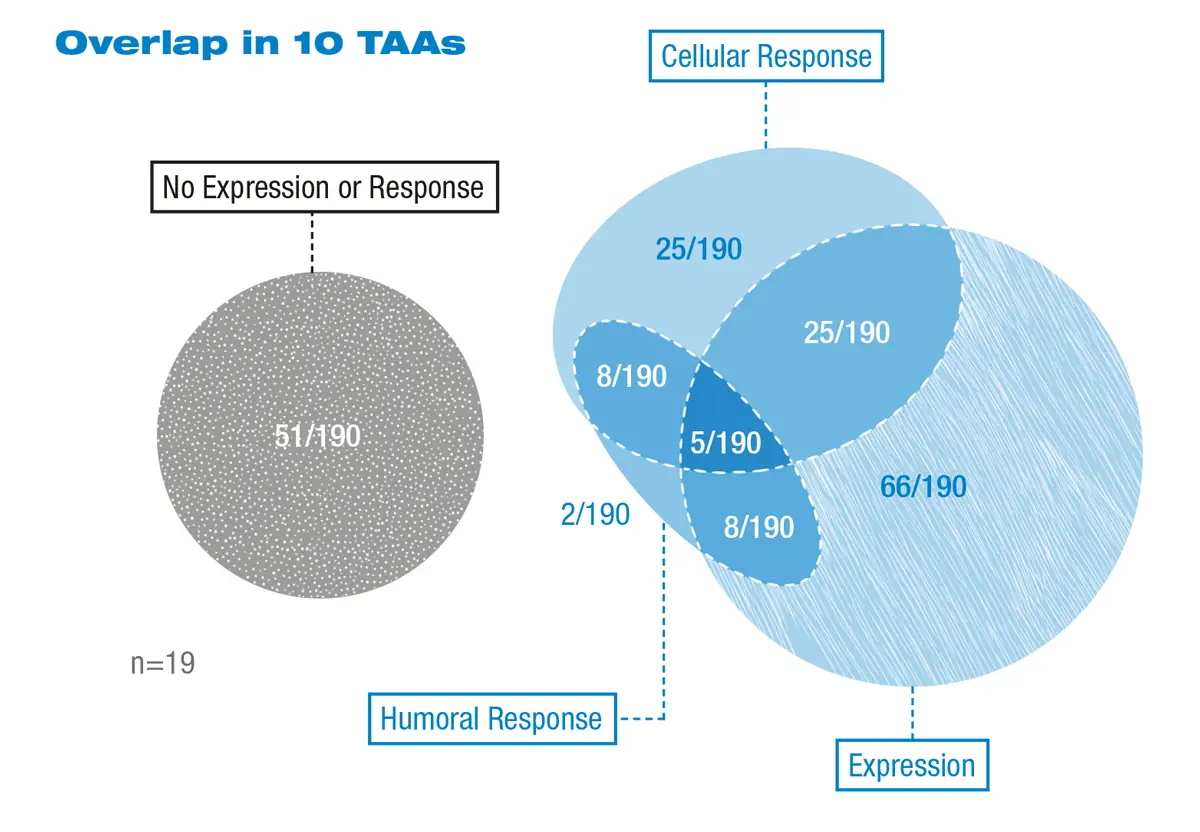 Fig. 2: Co-occurrence of expression, humoral response, and cellular responses to 10 tumor associated antigens in 19 patients
Successful expansion of specific cytotoxic T cells
To specifically expand the T cells, the researchers isolated them from the PBMCs and created antigen-presenting B cells (CD40Bs) from the same source. They cultured both cell types together with the peptide pools of the tumor-associated antigens for ten days. The results demonstrated that CD40Bs enable the parallel expansion of specific T cells that target multiple tumor-associated antigens. These polyclonal specific T cells exhibited cytotoxicity in vitro.
The scientists inferred from their findings that resistance to immunotherapy in esophagogastric adenocarcinoma might be attributed to antigen escape, rather than the absence of an immune reaction.
High homozygosity rate and imbalanced expression of HLA-I genes
Cancer cells often evade the immune system by downregulating or turning off the expression of HLA molecules. The survival, prognosis, and response to checkpoint inhibitors are closely tied to HLA expression on tumor cells. Maria Alejandra Garcia-Marquez, another member of Hans Anton Schlösser's research team, along with her colleagues, thoroughly genotyped the HLA class I genes in Caucasian patients with esophagogastric adenocarcinoma.[2] Surprisingly, they discovered a high rate of homozygosity: 35.0% of patients exhibited germline homozygosity for at least one HLA-I locus, compared to 19.1% in the HLA-matched general population.
Furthermore, the researchers analyzed the expression of individual HLA-I A/B/C alleles in heterozygous patients using transcriptome sequencing. The results revealed that 75% of these patients expressed their alleles unevenly. In 33% of them, heterozygosity was entirely lost, while in 66% the expression of only one or two HLA-I molecules was altered.
HLA homozygosity or imbalanced expression: Fewer immunogenic peptides
Garcia-Marquez and her colleagues also clarified how HLA homozygosity or imbalanced expression of HLA-I genes affects the repertoire of immunogenic peptides in patients with esophagogastric adenocarcinoma. The researchers utilized the IEDB analysis tool NetMHCpan to predict the immunopeptidome from the ten relevant tumor-associated antigens and from patient-specific mutation-associated neoantigens.
In the homozygous group, they discovered a significant reduction in peptides likely to bind well to HLA-A, HLA-B, and HLA-C molecules, compared to the heterozygous group. If patients were homozygous for more than one HLA-I gene, the number of good binding peptides was even lower. Allelic imbalance in the tumor samples also reduced the repertoire of predicted good-affinity binders.
Specific T cell reactions are polyclonal and linked to HLA-I alleles
Focusing on the NY-ESO-1 peptide, the researchers examined the peptide-specific T cell reactions in more detail. They built upon observations by Martin Thelen that endogenous cellular immune reactions against NY-ESO-1 are prevalent in esophagogastric adenocarcinoma.
The scientists used PBMCs from a NY-ESO-1-reactive donor to predict high-affinity binders for the HLA-I molecules. To do this, they derived 43 overlapping 15-mer peptides from the NY-ESO-1 protein. For 32 of them, the researchers successfully predicted high-affinity 9-10-mer peptides for the donor's HLA-I molecules.
Employing the FluoroSpot test, they detected IFN-γ reactions against 16 of the 43 overlapping 15-mer sequences of NY-ESO-1:
- 81.2% of the reactions were directed against 15-mers for which high-affinity 9-10-mer peptides had been predicted.
- As predicted, 36.2% of the peptides bound exclusively to a single HLA-I molecule of the donor.
As positive controls, the scientists used CEF, CD3, and a peptide pool from peptides&elephants that included all 43 sequences, eliciting a robust endogenous IFN-γ reaction in the donor under examination.
T cell responses against neoantigens
In another patient, the researchers looked for T cell responses that targeted the patient's neoantigens derived from single-nucleotide variants. They co-cultured in vitro expanded T cells from peripheral blood with autologous CD40-activated B cells, which were used as antigen-presenting cells (APCs) and pulsed with synthetic peptides identified through whole-exome sequencing. Approaches without peptides or with actin from peptides&elephants served as controls. To evaluate T cell reactivity, they assessed clonotype expansion and IFN-γ release, determined via TCR sequencing and FluoroSpot.
The researchers discovered T cell reactivity to two peptides - GRGTGGSTGDADGPG and GGSTGDADGPGGPGI - and observed peptide-specific clone expansion. Notably, both peptides were predicted to bind to an HLA allele with reduced expression in the tumor sample.
Conclusion
Given that germline homozygosity is more prevalent in patients with esophagogastric adenocarcinoma, their immune surveillance of cancer cells is likely to be compromised, thereby increasing their cancer risk. It is advisable to consider a potential allelic imbalance of HLA-I molecules when treating esophagogastric adenocarcinoma.
Literature
- Thelen M, Keller D, Lehmann J, et al.: Immune responses against shared antigens are common in esophago-gastric cancer and can be enhanced using CD40-activated B cells. Journal for ImmunoTherapy of Cancer 2022;10:e005200. doi: 10.1136/jitc-2022-005200
- Garcia-Marquez MA, Thelen M, Bauer E, et al.: Germline homozygosity and allelic imbalance of HLA-I are common in esophagogastric adenocarcinoma and impair the repertoire of immunogenic peptides. Journal for ImmunoTherapy of Cancer 2024;12:e007268. doi: 10.1136/jitc-2023-007268